A1 · Cu-ETP
Current-carrying components, including connectors and shunts.

METALCON PL / EXPERTISE AND MANUFACTURING
Copper alloy classification: hardness, electrical conductivity and softening temperature based on data published by METALCON.
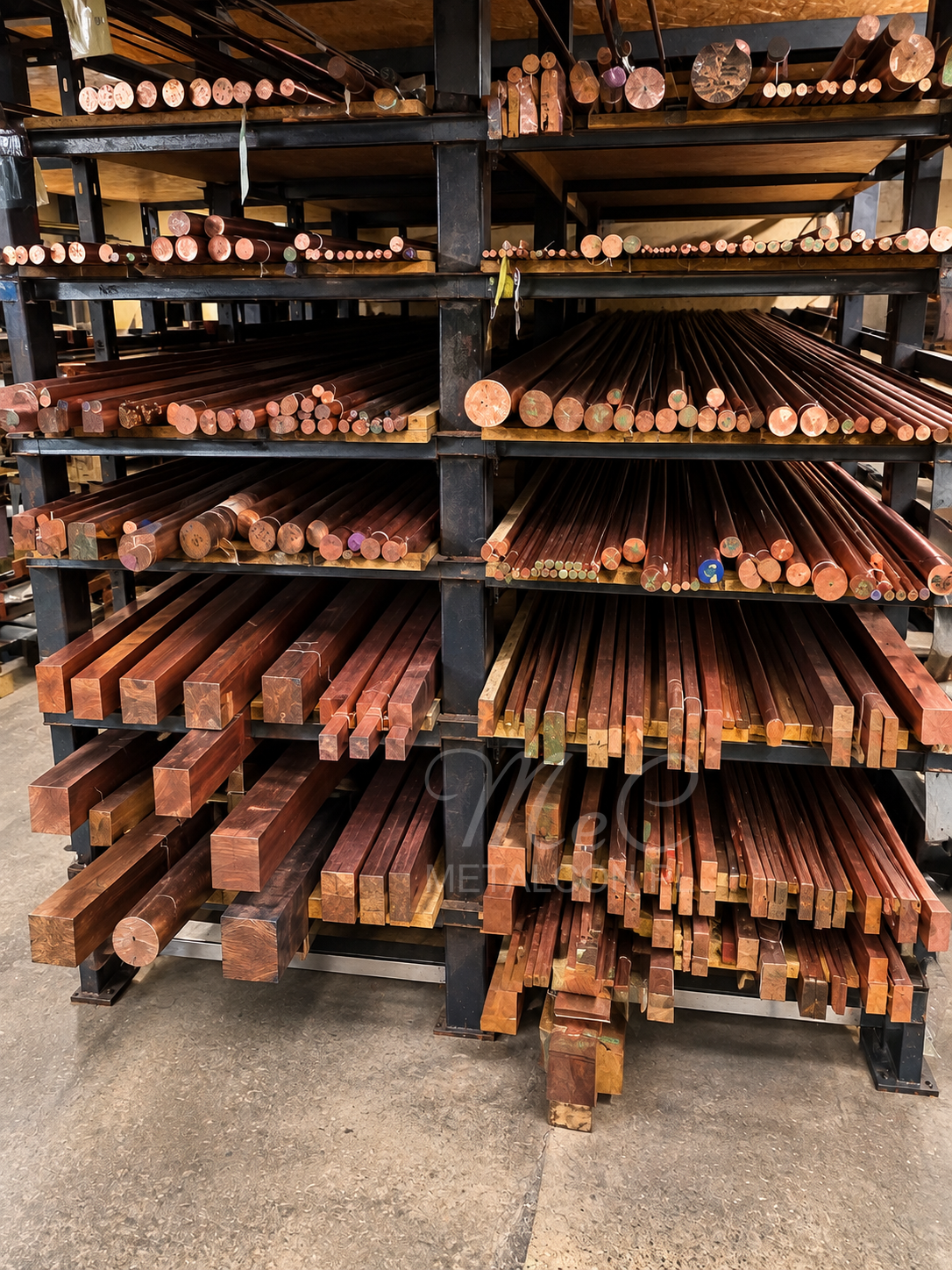
The materials used to manufacture our products are primarily high-quality copper and copper alloys, classified into three main groups. These groups differ in physical properties such as hardness and electrical conductivity. Choosing the right material is crucial, as it directly affects the performance and service life of individual welding machine components.
Group A1 consists of materials with very high electrical conductivity, primarily used for welding machine components that are not mechanically loaded. Applications include fixed connections and flexible current connectors. Their main advantage is minimising electrical losses while maintaining a suitable mechanical structure of the material.
Groups A2 and A3 are the most typical and widely used materials for welding electrodes. They offer a balance between hardness and conductivity, making them ideal for electrodes, electrode holders, arms and other components exposed to higher mechanical and thermal loads. Examples include CuCr1, CuCr1Zr and CuZr (A2), and CuCo2Be, CuNi2Si and CuCoNiBe (A3). We present their physical properties, including hardness and conductivity, in clear tables that help customers select the best material option for a specific application.
| Group | Designation | Product range | Minimum hardness HB | Minimum conductivity MS/m | Minimum conductivity %IACS | Softening temperature °C |
|---|---|---|---|---|---|---|
| A1 | Cu-ETP | < Ø25 | 86 | 56 | 96 | 150 |
| A1 | Cu-ETP | > Ø25 | 81 | 56 | 96 | 150 |
| A1 | Cu-ETP | Other forged products | 50 | 56 | 96 | 150 |
| Group | Designation | Product range | Minimum hardness HB | Minimum conductivity MS/m | Minimum conductivity %IACS | Softening temperature °C |
|---|---|---|---|---|---|---|
| A2 | CuCr1Zr | < Ø25 | 160 | 43 | 75 | 480 |
| A2 | CuCr1Zr | Ø25 ÷ Ø50 | 140 | 43 | 75 | 480 |
| A2 | CuCr1Zr | Ø51 ÷ Ø200 | 120 | 43 | 75 | 480 |
| A2 | CuCr1Zr | Other products (profiles, discs) | 120 | 43 | 75 | 480 |
| Group | Designation | Product range | Minimum hardness HB | Minimum conductivity MS/m | Minimum conductivity %IACS | Softening temperature °C |
|---|---|---|---|---|---|---|
| A3/1 | CuCo2Be CuCoNiBe | < Ø25 | 230 | 25 | 43 | 480 |
| A3/1 | CuCo2Be CuCoNiBe | > Ø25 | 220 | 25 | 43 | 480 |
| A3/1 | CuCo2Be CuCoNiBe | Other products (profiles, discs) | 210 | 25 | 43 | 480 |
| A3/2 | CuNi2Si | Full range (profiles, bars, discs) | 190 | 24 | 42 | 480 |
| Group | Designation | Product range | Minimum hardness HB | Minimum conductivity MS/m | Minimum conductivity %IACS | Softening temperature °C |
|---|---|---|---|---|---|---|
| B | W75Cu Cu25 | Round bars | 210 | 17 | 29 | 800 |
| B | Mo Mo 99,5 | Round bars | 150 | 17 | 29 | 800 |
| B | W W99,5 | Round bars | 400 | 17 | 29 | 800 |
“—” indicates that no value is given in the published table. It does not mean zero. Diameter designations and values have been retained as shown in the source table. Properties for a specific delivery are agreed on the basis of the material specification.
Current-carrying components, including connectors and shunts.
Current-carrying parts under load, electrode holders and welding arms, and electrodes for resistance welding low-carbon steels and steels with metallic coatings.
Current-carrying components under heavy load and electrodes for stainless and heat-resistant steels.
Inserts and tips for applications requiring tungsten, molybdenum or tungsten–copper composites.
Group B materials are used in more demanding applications, such as welding components made from materials with high electrical conductivity. This group includes metals such as tungsten and molybdenum, as well as their alloys with copper. Welding electrode materials in this group offer exceptionally high hardness, very good wear resistance and relatively lower conductivity than pure copper. Electrodes made from these materials are used, for example, to weld copper wires and in processes requiring exceptional precision and repeatability.
METALCON PL also manufactures components from other non-ferrous materials, such as brass and bronze. Brass is most commonly used to manufacture plates and welding fixture bases, as well as welding machine arms. Its good machinability and corrosion resistance make it a useful choice for many industrial applications.
Our entire production process relies on carefully inspected raw materials. All materials for welding electrodes and other components are sourced exclusively from reputable, proven European suppliers. Before entering production, each material undergoes thorough physical testing, including hardness and electrical conductivity measurements, to ensure consistent quality and reliable finished components.
By offering products made from top-quality materials, we guarantee a long service life and high performance in industrial applications. As a manufacturer with many years of experience, we provide technical support in selecting the right solution for a specific welding machine and welding process.
PRACTICAL GUIDANCE / PREPARING AN ENQUIRY
Attach a legible drawing with its reference and revision, where applicable. Specify quantity, material grade, tolerances and the required date. Include requirements not shown on the drawing, such as operating conditions or inspection scope.
Describe the component function, the material being welded, loads, and thermal and electrical conditions. Include any previous material designation or supply document. Colour and a photograph alone do not reliably identify a material grade.
For a bar, give the diameter or cross-section and length; for flat stock, give width, thickness and length. Add the grade if known, and the number of pieces or quantity required. State whether the material is intended for further machining.
FROM TECHNICAL DOCUMENTATION TO FINISHED COMPONENT
A drawing, sample or description of the application is a good starting point for working together.